About Firstground
The whole has to be in the decision.
Firstground is a land restoration and Holistic Management practice based in Granbury, Texas. I start with what the people need the ground to do, read what is actually happening, put the work in order, and then watch what happens.
Bear Shaw
Most of my working life was industrial construction.
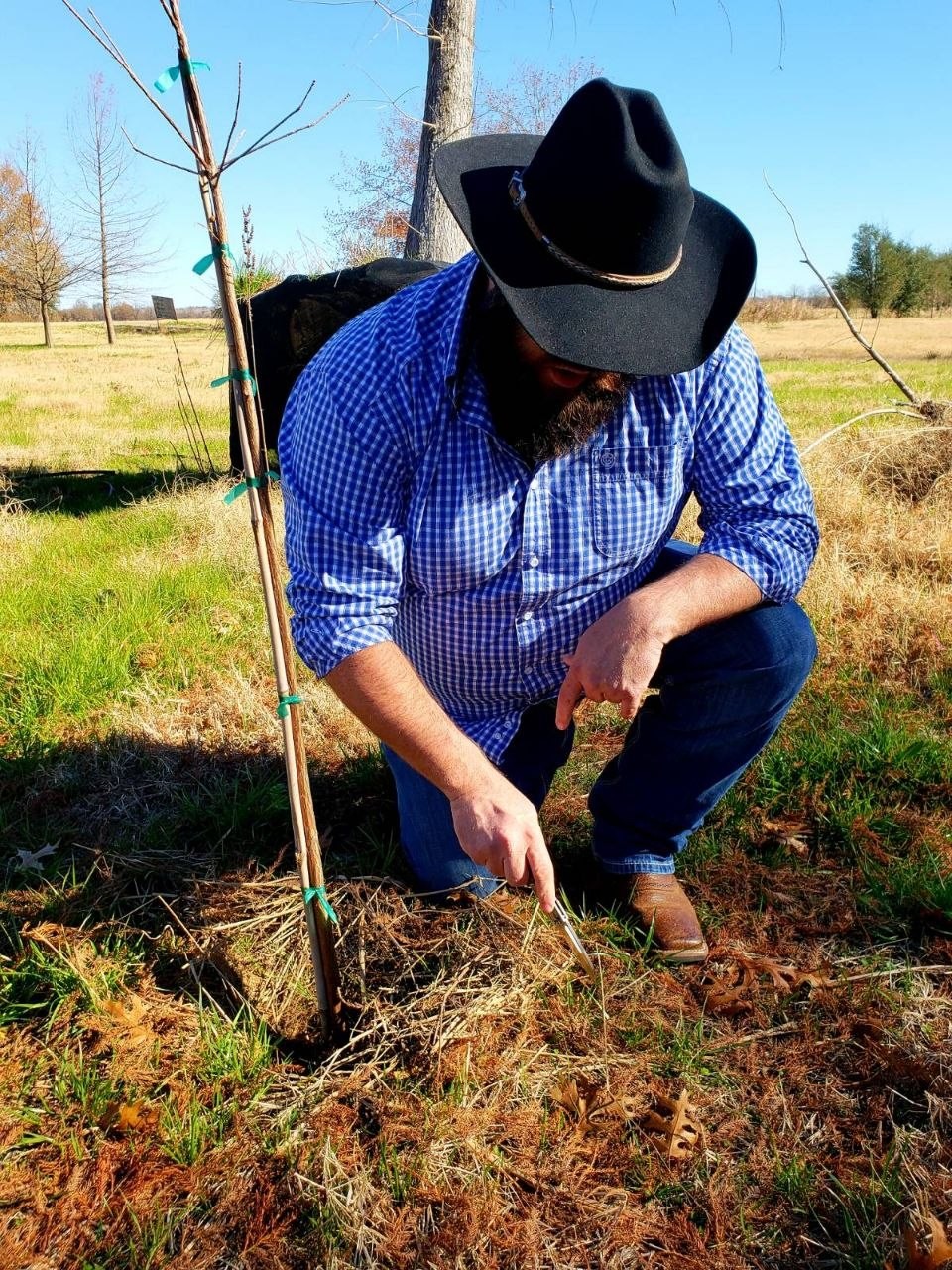
I spent about 25 years in industrial construction, project management, and operations. About 15 years ago I started studying Holistic Management. That led into Holistic Planned Grazing, ecological monitoring, the Regrarians Platform, Keyline land planning, soil ecology, and the rest of the work that eventually became Firstground.
Industrial work made sequence hard to ignore. Plans meet weather, budgets, crews, access, and whatever the field decides to hand you that day. Put something in the wrong order and there is a good chance you pay for it twice.
Land is not much different. Start with the whole. Make the more permanent decisions first. Keep water, access, infrastructure, soil, money, labor, and management in the same conversation. Then watch what the ground does and adjust from there.
How the practice works
I use Holistic Management to keep the whole in the decision and the Regrarians Platform to keep the physical work in order.
Start with the whole under management. What are you trying to build? Who decides, who influences the decisions, and who does the work? What land, livestock, equipment, money, labor, skills, knowledge, and relationships do you already have? What does the place need to produce, and what quality of life does the work have to support?
Work from the harder-to-change layers down: climate and geography, water, access, ecosystems, buildings, fences, soils. Economy and energy run through all of it.
Read the four ecosystem processes in the field: water cycle, mineral cycle, energy flow, and community dynamics. Follow the water. Open the soil. Look at roots, cover, decomposition, plant recovery, and animal impact where livestock are part of the picture. Keep what was observed separate from what is inferred or still needs checking.
Test the recommendation against cause and effect, the weak link, marginal reaction, gross profit where it applies, labor, money, dependencies, and what the owner is actually trying to accomplish. If one move solves more than one problem, it moves up the list.
When a change can be tried safely, start small. Decide what should improve, what would make us stop, and what to watch. Then adjust when the land or the operation says the call was wrong.
Specialists are part of the work
Some questions are not mine to answer.
Engineering, hydrology, lab work, wildlife biology, legal work, appraisal, formal verification: when a decision depends on a specialist, I want that person involved before we make the decision that depends on them.
If a dam needs an engineer, it needs an engineer. I do not need to be the engineer to keep the rest of the project moving.
Granbury · North Central Texas